SOFTWARE MODERNIZATION IS A CRITICAL INVESTMENT IN SUCCESS

Start reaching your full potential today
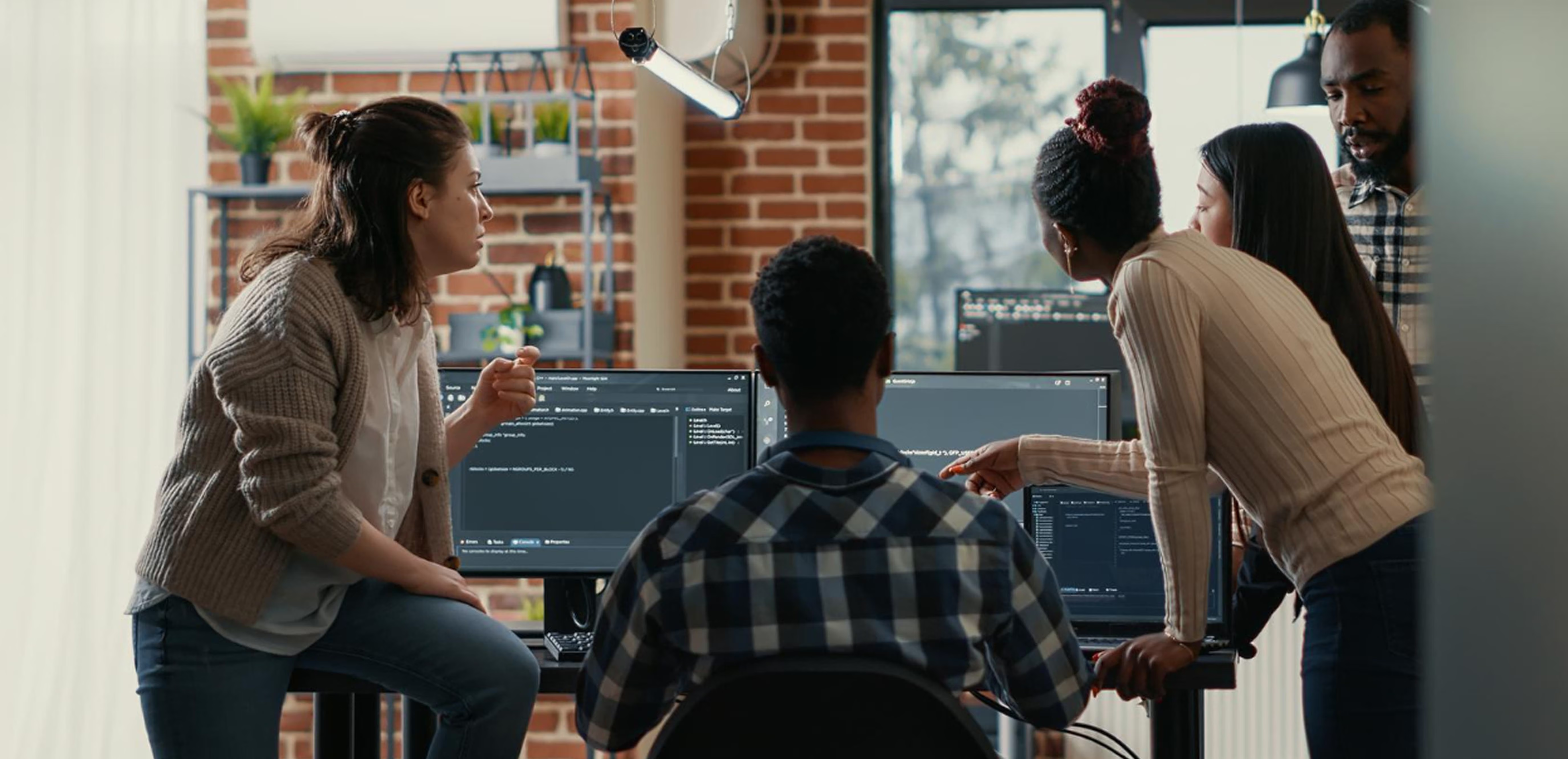
A group of developers looking at code on a computer screen
What It Is

We assess aging or unstable software, then replace it piece by piece behind a stable interface while your business keeps running on it.

Who It's For

Leaders whose strategy sounds right in the boardroom but lands differently with their teams and their customers.

What Changes

Bugs stop eating months, each replacement can be switched back in minutes, and the old code is actually gone at the end.

This might be you if...

Orange Checkmark

“Every time we fix one bug, two more show up.”

Orange Checkmark

“Only one person really understands how this system works.”

Orange Checkmark

“We’ve been “almost done” fixing the same problem for months.”

Orange Checkmark

“Nobody wants to touch that part of the code.”

Orange Checkmark

“We can’t add what customers ask for without breaking something.”

Orange Checkmark

“A full rewrite feels too risky, but standing still is costing us.”

What It Is

Replace old software while the business keeps running

Legacy software rarely fails all at once. It gets slower, more fragile and more expensive to change, until every request starts with “we can’t touch that.” The usual answers are endless debugging or a big rewrite that freezes the business for a year. Both are expensive bets.

We take a third path. First we assess what you have and decide, part by part, whether to keep, retire, buy or rebuild. Where rebuilding makes sense, we put a switch in front of the old code, measure how it behaves, and build a clean replacement beside it. Traffic moves over in small steps, with an instant way back. When the new part has proven itself, the old one is deleted.

How wYrks does it differentlyWe know when to stop debugging.If one bug runs past three business days, or nobody can explain its cause in a paragraph, debugging stops and planned replacement starts. Time stops leaking into code that can’t be saved.Proof before switching.The new module runs in the shadows on real inputs, and we compare its answers with the old system’s before any customer sees it. AI helps us map the old code and spot differences faster, with people making the calls.People and data, not only code.We map how your associates use the system today, rehearse every data migration with timed dry runs, and plan the training so the new version doesn’t become the next problem.
Seven steps to replace old code safelyNamed after the fig vine that grows around an old tree until the tree is no longer needed. First, a quick check on whether you’ve reached that point.Each step has an instant way back. The business keeps running on the old system until the new part has earned the traffic.Should you stop debugging? Tick any that apply.The Hydra effect: every fix creates two new bugs somewhere else.Diminishing returns: a senior developer has spent more than three to five days on one bug with no clear answer.The rewrite-to-debug ratio: rebuilding the module would take less time than you’ve already spent fixing it.One tick is enough to look at replacement. Two or more, and you’re probably paying to keep the problem.Map what goes in and outList every way in and out of the troubled part: data, calls, files. Write down what must never change.Add a switch in front of itPut a routing layer in front, still sending all traffic to the old code.Instant way back from here onMeasure firstRecord speed, errors and outputs of the old system. No replacement work starts without this.Build the replacementClean code, tested against the agreed contract. Nothing copied from the old logic.Run old and new side by sideFeed real inputs to both and compare answers until they match to an agreed standard.Parity reportMove traffic graduallyA small share first, then non-critical users, then everyone. If anything looks wrong, flip the switch back.Small share → everyoneDelete the old codeRemove it, its settings and its flags, then update the documentation. Nothing left to haunt you.

What you get

1

4P Strategic Evaluation readout

How your leadership and frontline teams each see Purpose, Process, Proof and Promise, side by side, with every answer traced to how people know it.

2

Challenge Statement and Success Measures

The real problem in one paragraph, plus the human and business measures (HPIs and OKRs) that will show it’s solved.

3

Why Statement and Mantra

The root reason your organization exists, reduced to a short line people can repeat and act on.

4

Purpose Statement, tested

One sentence built around your customer, with the decision-test results from your managers.

5

Desired State Statement

The agreed picture of where you’re going, signed off by your sponsor as the mandate for what follows.

6

Charter and Next-Step Roadmap

Who does what next, in what order, and how we’ll know it’s working.

1

Modernization assessment

A plain-language review of your system’s architecture, technical debt, security risks and how people actually use it.

2

Keep, retire, add or rebuild map

A recommendation for each major part, with the cost of standing still made visible.

3

Modernization roadmap

Milestones, the work involved, and what happens to the old system at the end.

4

Replacement modules with parity reports

Each new part, plus the shadow-test evidence that it matches or beats the old one.

5

Migration rehearsal and reconciliation reports

Timed dry runs and checks that every record arrived intact.

6

Decommission record and handoff pack

Proof the old code is gone, with updated docs, runbooks and monitoring.

Software ModernizationThe business case agreed with leadership: what the system must do, what its instability costs, and what success looks like.Exposes technology deficits in Define, then closes them in Deliver by replacing unstable code without disrupting operations.A maintainable system with monitoring, cleanup rules and a maintenance rhythm, so it doesn’t become legacy again.Every wYrks service is a building block of I.D.I.D., the path from understanding the parts to aligning the whole.See the full I.D.I.D. processIdentifyClarify the challengeDefineUncover truths & close gapsIdeateConceptual bridgeDeliverRefine, build & executeEvolveSustain, then elevateCommitment Brand

Often Paired With

Before it · Process

Check whether what the market hears matches the purpose you're delivering on.

Explore Market Research & Probes →
Alongside it · Purpose

Check whether what the market hears matches the purpose your leaders just agreed on.

Explore Brand Audits →
After it · Process

Turn the purpose into daily behavior, incentives and norms across your teams.

Explore Corporate Culture Alignment →
Before it · Process

See where the old system creates workarounds before deciding what to replace.

Explore Friction Audits →
Alongside it · Proof

Put numbers on what instability is costing while the replacement runs.

Explore Performance Audits →
After it · Process

Once the foundation is stable and the data is trustworthy, add AI where it earns its place.

Explore thinkLRG AI Solutions Lab →